A settlement on Lake Jesup
Long before the groves and the gabled houses, this was Seminole country — a quiet shoulder of Spanish Florida where Seminoles and Black Seminoles lived along the lakes. In 1875, about forty families put down roots a mile southeast of Lake Jesup and called the place the Lake Jesup Settlement. They were a mixed company for the times: Confederate veterans and freed men and women from the war-worn South, joined soon after by Northerners and a thread of Swedish immigrants who would leave their mark on the town's very name.
In 1879, one of those Swedes — a shopkeeper named Andrew Aulin — was made postmaster, and he christened the new post office Oviedo, after the old cathedral city in northern Spain. The name stuck, even if the pronunciation drifted into the easy Florida cadence locals use today.
Citrus, steamboats & the Celery City
Around 1870, Dr. Henry Foster of New York set local hands to planting citrus along the shores of Lake Charm and Lake Jesup. He did more than plant trees — he paid for a rail link and founded the Lake Jesup Steamboat Company, giving Oviedo's fruit a way to reach the wider world. A local grower, Butler Boston, grafted the budwood that gave the region its prized tangerines and the temple orange.
Then came the Great Freeze of 1894–95. With the groves crippled, farmers turned to the black, water-fed muck of Black Hammock on Lake Jesup's south shore and found it perfect for celery. Oviedo became a Celery City, and agriculture stayed its lifeblood clear through the 1940s. You can still read that era in the brick and clapboard of the Nelson and Company and R.W. Estes Celery Company historic districts downtown.
"A town built on citrus, saved by celery, and remembered for its chickens."
The roosters of downtown
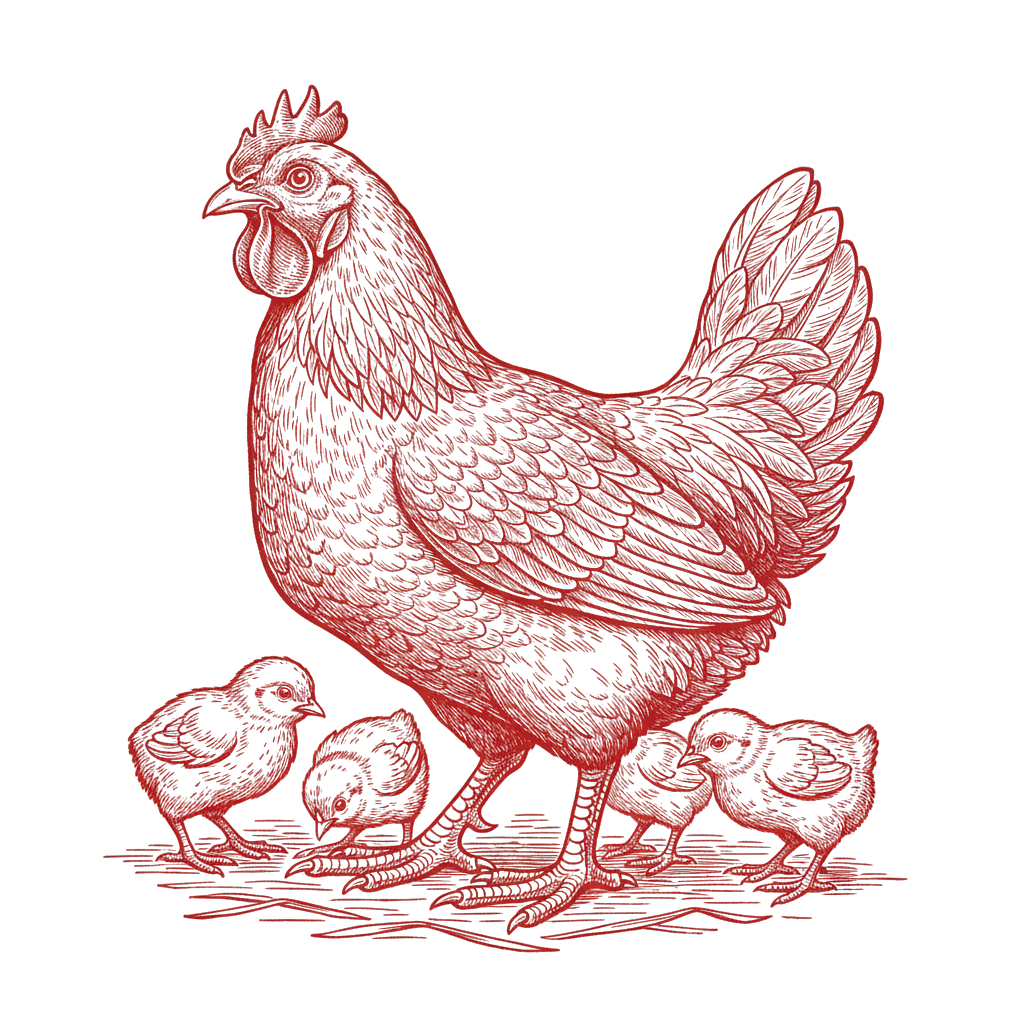
Every small town keeps a legend, and Oviedo's struts down the middle of the street. As the story goes, sometime in the 1980s a crate of chickens tumbled off a truck near the old downtown — and the birds simply decided to stay. Others tell it through a kind soul in the '90s who took in a stray hen and her chicks and set them loose to live free. However it began, the flock made historic downtown its home.
For more than forty years the roosters and hens have crossed at their leisure, dozed in the shade of the feed store, and turned up on more than one local t-shirt — "Poultry in Motion," "Crazy about chickens." Oviedo declared itself a bird sanctuary, merchants keep them fed, and harming one is firmly off the table. They are, by now, the town's feathered mascots — and the reason this directory wears a rooster on its crest.
Oviedo today
The town that incorporated in 1925 — and became a city by referendum in 1967 — is now home to some 40,000 people, with the University of Central Florida just down the road and the new gathering place of Oviedo on the Park at its heart. The celery fields have given way to neighborhoods, but the small-town soul is intact: historic downtown, the old church spires, Black Hammock's wild edge of the lake, and yes, the roosters, still keeping their appointments.
This directory is our small way of keeping that town close at hand — every local business in Oviedo, in one fast, friendly place.